Biography - About the poet

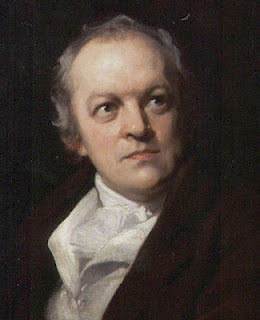
William Blake was born in London where he spent most of his life. He was educated at Henry Pars’s Drawing School before becoming apprentice to an engraver, making plates from which pictures for books were printed.
By the time he opened a print shop in London in 1784, he was already established as a graphic designer and drawing tutor. After a rather unsuccessful exhibition of his artistic work in 1809, he lived in obscurity for the rest of his long life.
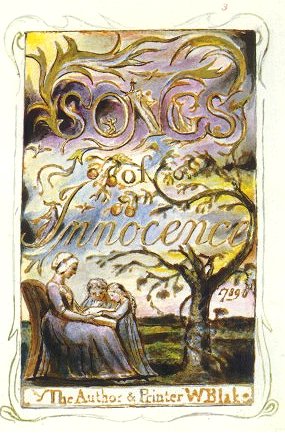
A radical supporter of the French Revolution, he was a critic of the social evils which he linked with the Industrial Revolution. His work as a poet and artist is usually understood in the context of his social, political and religious beliefs, but he was not really understood by his peers. Many of Blake's best poems are found in two collections: Songs of Innocence (first published with hand-colored illustrations in 1789) to which was added, in 1794, the Songs of Experience. The complete 1794 collection was called Songs of Innocence and Experience Shewing the Two Contrary States of the Human Soul. Broadly speaking, the collections look at human nature and society in optimistic and pessimistic terms, respectively - and Blake thinks that you need both sides to see the whole truth. He had very firm ideas about how his poems should appear.


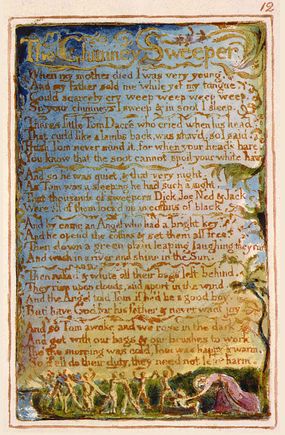
It’s important to remember that he was both an artist and a poet and the majority of his work is a combination of images and words. In keeping with his profession, Blake did not print his poems in type, but engraved them (like handwriting) on an illustrated background.

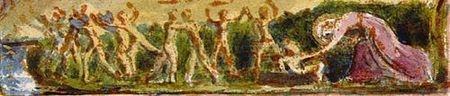
Each page is an engraving of a text surrounded by images and designs. The printed copies were then coloured by hand in watercolours and bound by hands into books. Blake was an artist in words and pictures.


An illustrated page from Songs of Innocence
colored engraving by William Blake.

A poem in detail - The Chimney Sweeper (1789) from “Songs of Innocence”

When my mother died I was very young,
And my father sold me while yet my tongue
Could scarcely cry " 'weep! 'weep! 'weep! 'weep!"
So your chimneys I sweep & in soot I sleep.

1

There's little Tom Dacre, who cried when his head,
That curl'd like a lamb's back was shav'd: so I said
"Hush. Tom! never mind it, for when your head's bare,
You know that the soot cannot spoil your white hair."

5

And so he was quiet & that very night,
As Tom was a-sleeping, he had such a sight!
That thousands of sweepers, Dick, Joe, Ned or Jack,
Were all of them lock'd up in coffins of black.


10

And by came an Angel who had a bright key,
And he open'd the coffins & set them all free;
Then down a green plain leaping, laughing, they run,
And wash in a river, and shine in the Sun.


15

Then naked & white, all their bags left behind,
They rise upon clouds and sport in the wind;
And the Angel told Tom, if he'd be a good boy,
He'd have God for his father & never want joy.


20

And so Tom awoke; and we rose in the dark.
And got with our bags & our brushes to work.
Tho' the morning was cold, Tom was happy & warm;
So if all do their duty they need not fear harm.

_____________________________________________________________________________

3 scarcely: hardly
3 weep: the childish imperfect pronunciation of “sweep” (It. spazzare) literally means “weep” (It. piangere) as the poem progresses; it’s the cry of the unhappy chimney sweeper through the streets
6 back: his hair was curled like the wool on a lamb back
7 mind: don’t care about it
10 sight: vision
15 plain: meadow
17 bags: bags of soot
18 sport: play
20 want: lack
23 Tho’: though
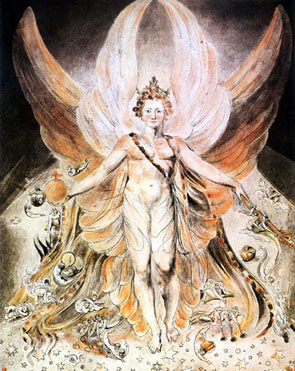
_____________________________________________________________________________

Arcangelo.

1. Poem subject and themes

The poem ”The Chimney Sweeper” is set against the dark background of child labor that was well known and socially accepted in England in the late 18th and 19th century. At the age of four and five, boys were sold to clean chimneys, due to their small size. The speaker of this poem is a small boy who was sold when his mother died. He tells the story of a chimney sweeper, Tom Dacre, who cried when his hair was shaved to prevent vermin and soot from infesting it. The speaker comforts Tom who falls asleep and has a dream or vision of several chimney sweepers all locked in black coffins.
An angel arrives with a special key that opens the locks on the coffins and set the children free. The children run through a green and sunny field and wash themselves in a river, coming out clean and white in the bright sun. The angel tells Tom that if he is a good boy, he will have this paradise.
When Tom wakes up, he and the speaker take their tools and go to work, a bit comforted that their lives will one day improve. In fact there is a sort of criticism of the evils of industrial England and of a culture and society that accepted the inhuman conditions of chimney sweeping on children; Blake also criticizes the use of promised future happiness to maintain the status quo and as an instrument for the oppression of poor. There is a suggestion that they cannot help themselves, but it is left to responsible, sensitive adults to do something for them.


2. Poem Technical Features
Structure and Form

“The Chimney Sweeper” has a simple form: four-line six stanzas are used to carry the argument. They are in rhyming couples with the AABB rhyme scheme. The structure of the poem, its short lines and its repetitive rhyming scheme have a stylistic innocence to suggest the speech of a child.

That rhyme scheme gives the impression that it is a happy poem, which we later find is not true. The point of view is that of a child, who lost his innocence of childhood a long time ago. As a result he speaks with the firmness and intelligence of an adult.

At the beginning of the poem it seems as if the speaker is neutral on the subject; in the second stanza it continues to sound quite optimistic and the use and choice of words doesn’t seem so dark ("Hush, Tom! never mind it, for when your head's bare, You know that the soot cannot spoil your white hair").


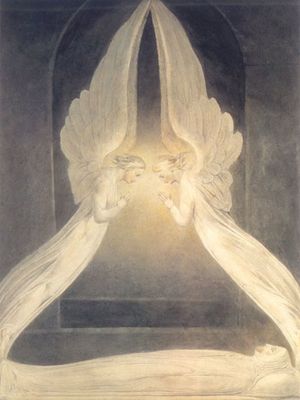
Cristo nel sepolcro, guardato dagli angeli.


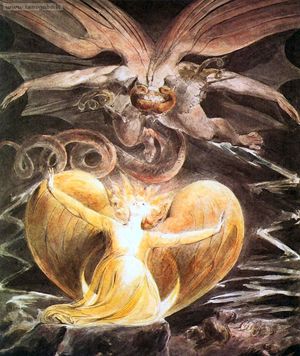
Il grande drago rosso e la donna vestita di sole.

Technical Features
  • unusual spellings and non-standard forms of punctuation, especially the ampersand (&) in place of the word "and" (today this is only normal in business names)
  • rhymed words are nearly always important nouns and verbs
  • use of alliteration ( use of the same letter or sound at the beginning of words that are close together, as in “I sweep, and in soot I sleep”)
  • repetition/ deliberate repeated use of a given word
  • elision of “s” in “sweep” (line 3) where Blake implies that a chimney sweeper “weeps” (cries) because of the soot and the unhappy life he lives.
  • use of words associated with light and cleanliness/ darkness and dirt
  • contrast between contrary states of happiness and sadness, hope and despair
  • contrast between “white” and “black”, “bright” and “ dark”, “night” and “sun”, “cold” and “warm”
  • contrast between the “white hair” that could go black with “the soot”
  • use of adjectives like “dark”, “black”, “cold” to suggest the two young boys’ present terrible state and an unknown and hostile place/ world
  • use of adjectives like “bright”, “white”, “warm” to suggest a more peaceful and comforting condition
  • repeated use of “And” to start lines

Key images

There are some suggestive details:

  • the chimney sweeper as seen by Blake’s poetic imagination
  • Tom Dacre’s head curled like a lamb’s black
  • the angel as seen through the eyes of a child
  • the angel that has a bright key
  • the idyllic setting of the “vision”: the green plain, the river and the sunshine (expression of Blake’s vision of a heavenly world and of the two young boys’ hope of a happy afterlife following their death) contrasted with “the dark” in which the chimney sweeper wakes up
  • association of hope and despair with innocence and experience


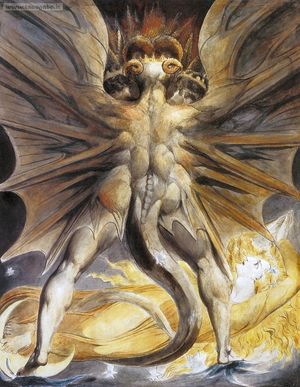
Il grande drago rosso e la donna vestita col sole.


3. Poem in detail

The two human characters are representative of the poor children of the time, while the angel may suggest a guardian angel or spirit; finally God will come to guide and help them.

It may suggest his goodness and the idea that God is their real father (and everyone’s real father), more than their earthly father who has left them. God is presented as the divine element in good people who look after children.

The poem also appeals to one of our basic fears if we are children: our fear of being lost or left behind by our parents. The reference is about the way in which we feel unsure about the world and our place in it.


4. Poem comprehension

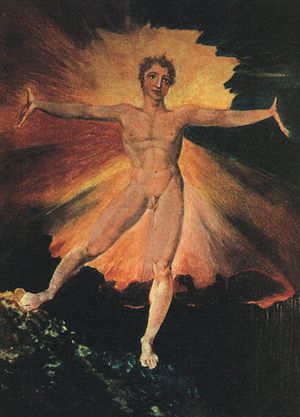
La rosa d'Albione.